How Many Crypto Exchanges Have a MiCA Licence?
As of 18 October 2026, 109 days have passed since the end of the maximum transitional period under MiCA in the European Union. The cryptocurrency exchange market has changed, but not all platforms have obtained the required authorisation. Some have restricted their services, forcing users to look for alternatives.
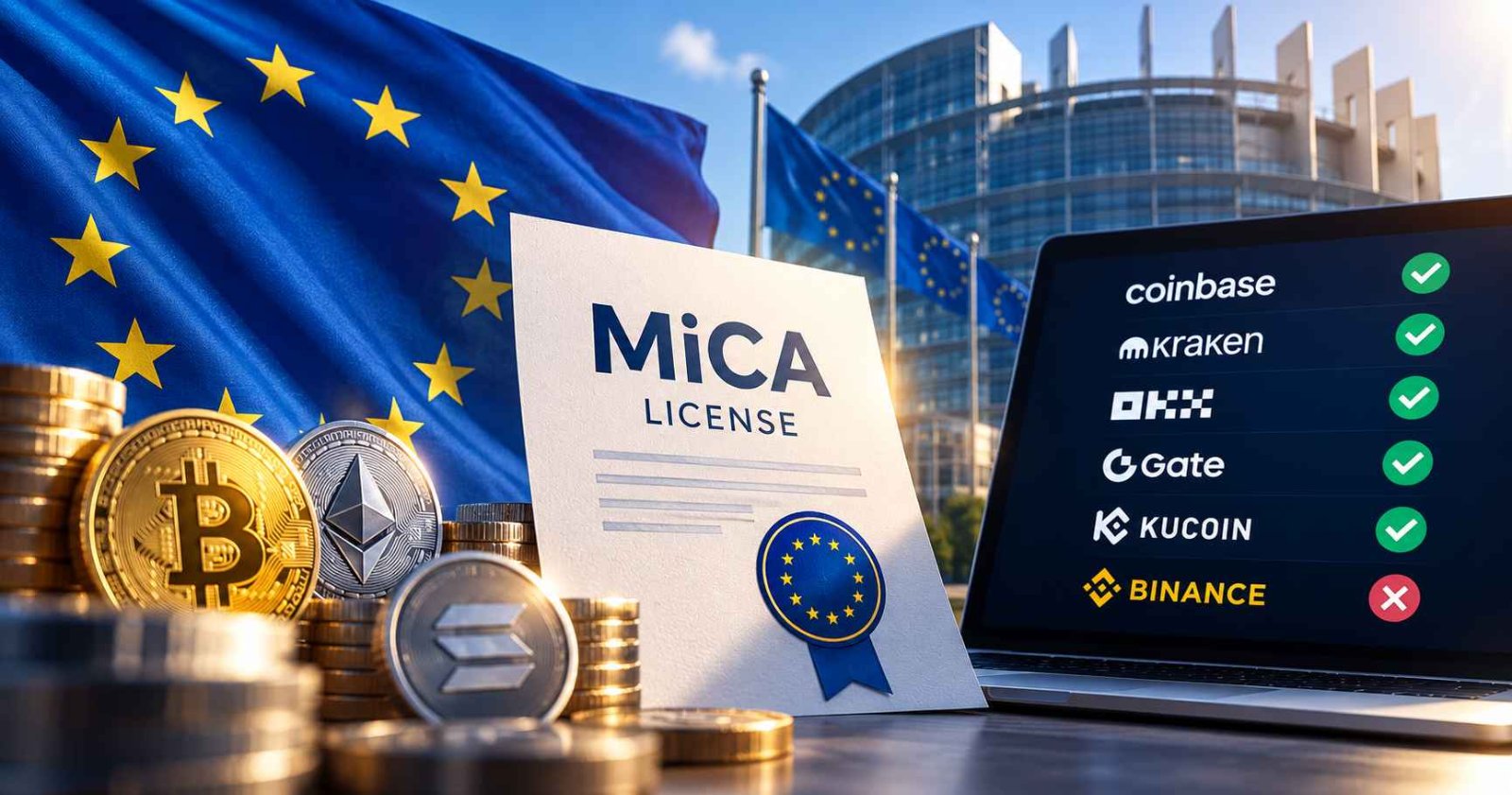
What Is MiCA and What Changed on 1 July?
MiCA, short for Markets in Crypto-Assets Regulation, is the European Union’s regulatory framework for crypto-assets and crypto-asset service providers (CASPs). It establishes common rules for companies providing crypto-asset services across the EU.
The main MiCA requirements for CASPs began applying on 30 December 2024. Existing providers could benefit from transitional arrangements, subject to national rules. The maximum transitional period ended on 1 July 2026.
233 Exchanges on CoinMarketCap. Only Around a Dozen Have a MiCA Licence
CoinMarketCap lists 233 spot cryptocurrency exchanges worldwide. However, this figure does not reflect how many platforms are authorised to operate in the European Union.
Based on our research, only around a dozen entities focused on exchange services have obtained MiCA authorisation. The number of platforms actually available to European users may be smaller, as regulatory authorisation does not automatically mean that trading services are accessible in every EU country.
Examples of exchanges with MiCA authorisation include OKX, Coinbase, Gate and Kraken. However, users should check the specific legal entity, the scope of its authorisation and the services available in their country.
KuCoin EU is another example of why authorisation and actual availability need to be considered separately. Even where a company has obtained regulatory approval, users should verify whether its trading platform is operational and accessible to European customers.
Binance Without a MiCA Licence. Users Had to Look for Alternatives
In late June 2026, Binance informed European users about restrictions related to the lack of MiCA authorisation. On 24 June, the company withdrew its licensing application in Greece and stated that it intended to apply in another EU member state.
Binance also informed users about options for their assets, including transferring them to self-custody or another provider. Without the required authorisation, services covered by MiCA could no longer continue on the same basis after the transitional period ended.
This does not necessarily mean that Binance has permanently abandoned the European market. The company indicated that it would continue seeking authorisation. Nevertheless, restrictions affecting one of the world's largest cryptocurrency exchanges could encourage users and trading volumes to move to authorised competitors.
The reasons why Binance did not obtain the required authorisation before the deadline remain unclear.
How to Choose a Cryptocurrency Exchange in Europe
Before opening an account, check three things:
MiCA authorisation: verify the legal entity and its regulatory status.
Availability: make sure the platform accepts customers from your country.
Fees and services: compare trading fees, supported cryptocurrencies and available features.
MiCA Intelligence helps users compare cryptocurrency exchanges based on their regulatory status, availability and services for European customers.
Looking for a crypto exchange with a MiCA licence?
Exchanges linked to this article
Links to the exchanges are affiliate links. The order is alphabetical and does not come from the ranking.

Coinbase
MiCA license · Luxembourg
Gate EU
MiCA license · Malta
Kraken
MiCA license · Ireland
OKX
MiCA license · Malta